Project Brief
To make a working model (prototype) of our domestic LED Light so that between 80% - 100% (by surface area) of it is made from our assigned anodic, cathodic, and CFRC materials. For the remaining % we can use any other material (metal, plastic, timber, etc) in any form (rod, tube, solid, screws, bolts, nuts, rivets, etc).
Our new LED Light must be resistant to corrosion by employing the most successful method(s) that were tested in previous assessments. The LED Light must be resistant to corrosion but must not be painted or powder coated. Our new Light must be able to perform its intended function, have an aesthetic and creative quality, and be environmentally sustainable.
This project is designed to not only test and apply our knowledge but also demonstrate how well we impart our knowledge to the others in the class.
Innovation and Sustainability
The Enso Fu embodies innovation through its unique design features:
Compact Design: The fan-like shape of the lamp offers unparalleled portability and versatility. Users can effortlessly move it around and place it wherever it’s needed, whether it’s on a desk, bedside table, or outdoor setting.
Artistic Appeal: Drawing inspiration from traditional Japanese handheld fan designs, the lamp boasts an elegant and artistic appeal. It serves not only as a source of light but also as a functional piece of art, enhancing the ambiance of any space it graces.
By integrating these innovative design elements, the fan-like LED light presents a fresh and captivating take on traditional lighting solutions. It seamlessly blends functionality with aesthetics in a compact and versatile form, offering users a truly unique lighting experience.
The lamp is designed with sustainability in mind, focusing on several key aspects:
End-of-Life Considerations: Meticulously designed the lamp for easy disassembly and recycling, ensuring that its components can be properly disposed of or repurposed at the end of its life cycle. This not only minimises waste but also promotes a circular economy where materials are reused and recycled.
Longevity: The lamp is built to stand the test of time. The Enso Fu is crafted with durable materials and components, ensuring its longevity and reducing the need for frequent replacements. By extending the lifespan of the lamp, we minimise waste generation and promote a more sustainable consumption model.
In summary, the Enso Fu represents a harmonious blend of innovation and sustainability. Its innovative design features offer unmatched versatility and aesthetic appeal, while its sustainable attributes contribute to a healthier planet for generations to come.

Manufacturing and Materials
In the initial phase, a prototype was crafted from blue foam and 3mm MDF, featuring laser-cut arches in the MDF to ensure precise scale and dimensions for accommodating the light bulb and fitting. Following the completion of the blue foam prototype, it was noted that it was slightly undersized. From this, a paper prototype was created to rectify the scale discrepancy. Utilising this paper prototype as a guide, UD carbon fiber was cut to dimensions of 140 x 250mm and placed within the previously prepared tool made from aluminum.
Post-fabrication, the CRF underwent a curing process in the oven for six hours before meticulous sanding with P360 sandpaper. Moving forward, 1mm mild steel was shaped using a guillotine and then refined further with belt sanding. Additionally, 0.5mm copper was cut using tin snips. Both metals underwent hand sanding with P80 and P360 sandpaper to ensure smoothness and prevent any potential injuries.


A copper strip measuring 30 x 230mm was cut and then rounded to create the center ring for the light fixture to sit.
Once the mild steel was cut to shape, one side was polished with Brasso metal polish while the other side was sandblasted.
The copper ring was silver soldered together with the copper half-circle, joining the two pieces. This ensured that the copper could stand on its own. Subsequently, the copper underwent a cold-water rinse to wash off the flux, followed by polishing with Brasso to remove any burn marks from the blowtorch. Gentle sandblasting was then applied to the copper to avoid bending and remove any remaining burn marks.
The carbon fiber stand had a hole drilled through it for the light fixture to pass through, along with a slot for the mild steel to fit in, and a small hole on the side for the cable to run out. The CRF was sanded once more with sandpaper to remove any scratches or protruding fibers and to achieve a shiny finish.
Render


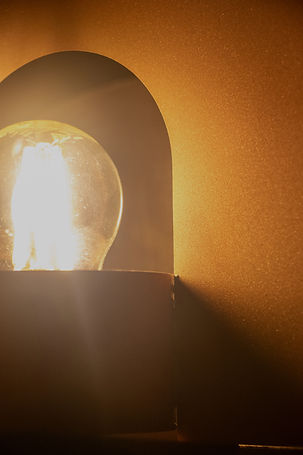
Final Product